

Aluminum bakeware symptoms can be subtle yet disruptive. You might notice unexpected bloating after lasagna night or a strange metallic taste in your favorite dessert—and never suspect your trusty pans. In this article, we’ll explore the seven surprising signs that your aluminum bakeware may be leaching metals into your meals and how to stop it. You’ll learn:
- The science behind aluminum corrosion
- Warning symptoms and health clues
- A quick DIY test to check your bakeware
- WHO/EFSA intake guidelines and who’s most vulnerable
- Safe, stylish cookware swaps
- A free “5-Step Kitchen Detox” checklist
Let’s dive in and safeguard your kitchen—and your body—from hidden aluminum exposure.
What Causes Aluminum Leaching?
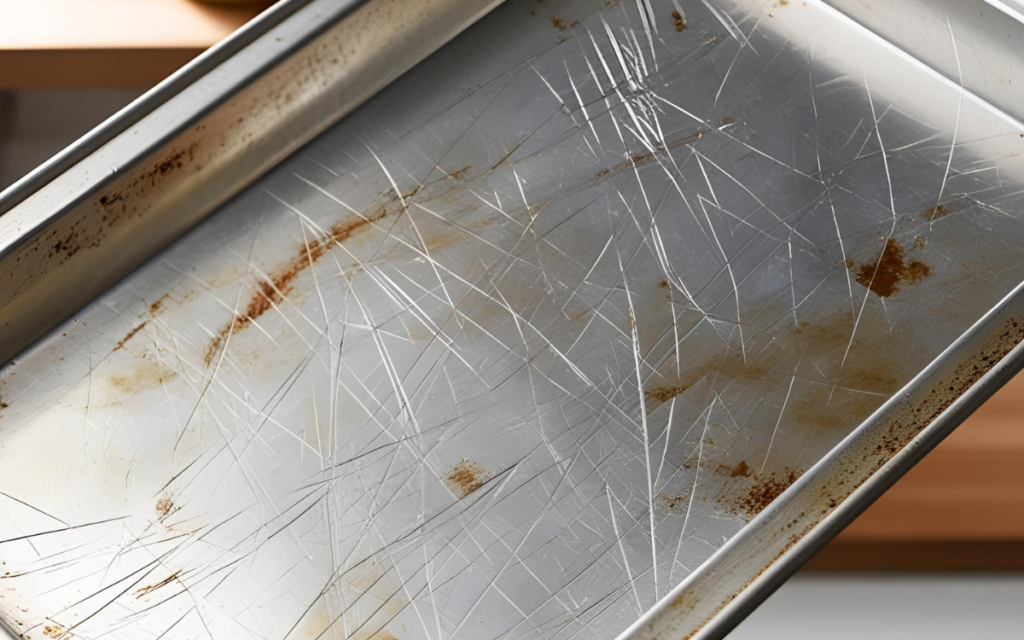
Aluminum’s benefits—lightweight, even heating, and low cost—come with a drawback: it’s reactive. When the protective oxide layer on bare or scratched aluminum pans breaks down, Al³⁺ ions migrate into food, especially:
- Acidic dishes (tomato sauces, citrus glazes)
- Salty or alkaline recipes (brines, baking soda doughs)
- High-heat, long-bake methods (roasting above 200 °C)
Key Factors
- pH Level: Lower pH (more acidic) accelerates leaching.
- Time & Temperature: The longer and hotter, the more migration.
- Surface Condition: Scratched or un-anodized pans lack protection.
“Cooking tomato sauce in bare aluminum can release 3–6 mg of aluminum per serving,” warns a 2023 MDPI study³. Over time, these small doses add up—especially if you bake daily.
7 Alarming Aluminum Bakeware Symptoms
1. Gastrointestinal Upset

- Signs: Bloating, cramps, loose stools after meals.
- Why It Happens: Aluminum irritates the gut lining, disrupting enzyme activity².
- Tip: Swap to borosilicate glass for acidic bakes to soothe digestion.
2. Fatigue & Brain Fog
- Signs: Afternoon crashes, poor concentration, mental “fuzziness.”
- Why It Happens: Aluminum can cross the blood-brain barrier in trace amounts, affecting neurotransmission³.
- Tip: Use anodized aluminum or ceramic-coated bakeware to minimize exposure.
3. Metallic Taste
- Signs: Slightly off or metallic flavor in pies, cobblers, custards.
- Why It Happens: Tiny metal particles alter the food’s taste profile.
- Real-Life Fix: A local bakery replaced scratched sheet pans with enameled steel—customers immediately noticed better sourdough flavor.
4. Skin Irritations & Rashes
- Signs: Eczema flare-ups, itchy patches on hands and arms.
- Why It Happens: Ingested aluminum may trigger systemic immune responses in sensitive individuals.
- Expert Insight: Dermatologists link heavy-metal ingestion to worsened atopic dermatitis.
for more detailed overview of heavy metal toxicity, refer : https://www.mayoclinic.org/
5. Headaches & Migraines
- Signs: Tension headaches or migraines unrelated to typical triggers.
- Why It Happens: Aluminum may affect vascular function, causing vessel constriction⁴.
- Tip: Track headache patterns alongside meals baked in aluminum; if correlated, switch cookware.
6. Allergic-Type Responses
- Signs: Runny nose, watery eyes, mild throat irritation when tasting new bakes.
- Why It Happens: Pseudo-allergic reactions from ingested metal ions or inhaled aluminum-laden steam.
- Tip: Ensure good ventilation and perform the vinegar soak test (below) to reduce unseen release.
7. Joint & Muscle Aches
- Signs: Unexplained stiffness, soreness without physical exertion.
- Why It Happens: Aluminum can contribute to low-grade systemic inflammation, aggravating joint discomfort⁵.
- Tip: Consider anti-inflammatory diet tweaks alongside cookware changes if you suffer from arthritis.
DIY Leaching Test for Your Bakeware
Test your pans in three simple steps:
- Vinegar Soak
- Fill the pan with white vinegar; let sit 1 hour.
- Look for milky discoloration—sign of corrosion.
- pH-Strip Check
- Dip a pH strip in the vinegar before and after soaking.
- A drop > 0.5 pH units signals acid-driven aluminum release.
- Home Metal-Ion Kit
- Purchase a metal test kit online or at hardware stores.
- Follow instructions to detect aluminum concentration.
Fail any of these? It’s time to retire that pan.
Safe Aluminum Intake & At-Risk Groups
Tolerable Intake Levels
- WHO: 2 mg/kg body weight per week⁶
- EFSA: Similar guidelines, stressing cumulative exposure
For a 60 kg adult, that’s 120 mg/week (~17 mg/day). Just two servings of acidic casserole can push you over—so vigilance pays off.
Who’s Most Vulnerable?
- Children & Infants: Immature renal clearance
- Kidney-Compromised Patients: Reduced detox capacity
- Elderly: Slower accumulation breakdown
- Autoimmune/Neurodegenerative Conditions: Heightened sensitivity
If you’re in any of these groups, prioritize non-reactive cookware such as glass, ceramic, or high-grade stainless steel.
Non-Toxic Cookware Alternatives
| Material | Pros | Cons | Price |
|---|---|---|---|
| Anodized Aluminum | Hard, corrosion-resistant surface | Core still aluminum—avoid acidic | $$ |
| Cast Iron (Enameled) | Unbeatable heat retention; non-reactive | Heavy; bare iron needs seasoning | $$–$$$ |
| Borosilicate Glass | Fully non-reactive; see-through baking | Fragile; slower heat-up | $–$$ |
| Ceramic/Stoneware | Beautiful finishes; non-toxic | Prone to thermal shock cracks | $$ |
| Stainless Steel | Durable; dishwasher-safe | Less even heat distribution | $$–$$$ |
Maintenance Tips:
- Hand-wash glazed pieces to preserve finish.
- Preheat cast iron gradually.
- Store glass on padded shelves.
🚨 Your wellness journey is one click away – Don’t miss out!
👉 Explore Here
5-Step Kitchen Detox Toolkit
- Inventory & Inspect: Mark scratched or worn aluminum for replacement.
- DIY Test: Perform the vinegar and pH-strip checks.
- Phase Out: Donate or recycle failed bakeware responsibly.
- Invest Gradually: Start with a borosilicate dish and an enameled Dutch oven.
- Care & Storage: Label purchase dates; season cast iron every 3–6 months.
Conclusion & Next Steps
By recognizing aluminum bakeware symptoms—from digestive woes to joint aches—you empower yourself to make safer cooking choices. Run the at-home tests, compare your results against WHO/EFSA guidelines, and transition to non-reactive cookware.
Ready to Protect Your Health?
- Share your test results and tips in the comments.
- Subscribe for more Healthy Hacks.
- Pin this guide on Pinterest with #MetalSafeKitchen and help friends bake safely!
[…] 🚨Explore : 7 Surprising Aluminum Bakeware Symptoms and How to Stop Them […]